


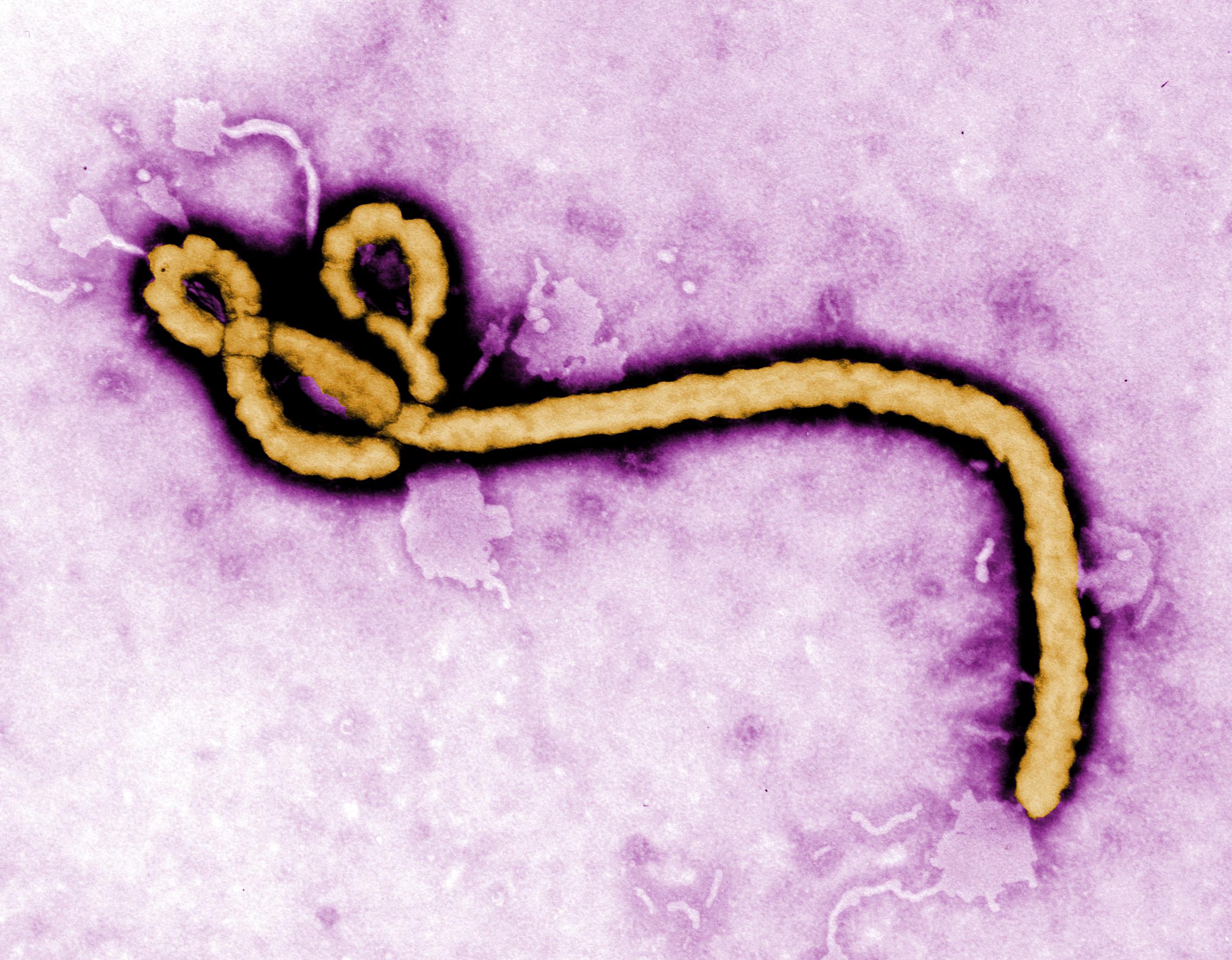
Description
Revue de presse
- L’épidémie d’Ebola en RDC s’intensifie à un rythme «exceptionnel», avertit l’OMSon 6 août 2026
Au 30 juillet, un total de 3605 cas confirmés, dont 1587 décès, avaient été signalés en RDC, selon l’OMS.
- Santé Canada autorise un essai clinique pour un vaccin contre l’Ebolaon 6 août 2026
Ce virus est à l’origine de l’épidémie qui a jusqu’à présent fait presque 1800 morts en RDC.
- Congo says death toll in fastest-growing Ebola outbreak has passed 1,500on 6 août 2026
The fastest-growing Ebola outbreak has killed more than 1,500 people in eastern Congo, official data released on Thursday showed, marking a 50 per cent increase in around a week that shows the emergency continuing to outpace response efforts.
- Health Canada authorizes mRNA vaccine trial for Ebola virus causing huge outbreak in Congoon 6 août 2026
Health Canada has given Moderna the green light to launch a clinical trial for a vaccine targeting the Bundibugyo form of the Ebola virus, which continues to surge throughout the Democratic Republic of the Congo.
Mises à jour
- Africa CDC and WHO call for urgent, community-led action to contain Ebola in the DRCon 6 août 2026
The Africa Centres for Disease Control and Prevention (Africa CDC) and the World Health Organization (WHO) have called for an urgent scale-up of the community-led Ebola response in the Democratic Republic of the Congo (DRC), with stronger early detection, contact follow up, access to care, support for frontline health workers and faster delivery of resources to affected communities. The call followed a joint high-level mission to Uganda and DRC on 4 and 5 August, which drew lessons from Uganda’s successful containment of local transmission, assessed operational challenges in Bunia and brought the priorities of communities and frontline responders into high-level discussions with national leaderships in Kinshasa. The mission was led by Dr Tedros Adhanom Ghebreyesus, WHO Director-General, H.E. Dr Jean Kaseya, Director-General of Africa CDC, and Dr Mohamed Janabi, WHO Regional Director for Africa.With visits in Kampala, Bunia and Kinshasa, members of the delegation met national and provincial authorities, response coordinators, health workers, community representatives and partners. The mission assessed progress, identified critical operational gaps and brought the concerns of affected communities and frontline teams directly to national leadership.Uganda shows that containment is possibleIn Kampala, the delegation engaged with national authorities and response teams following Uganda’s declaration of the end of its outbreak on 28 July 2026.Uganda recorded 20 confirmed cases and two deaths. All previously listed contacts completed follow-up.Africa CDC and WHO commended Uganda’s leadership and the work of health workers, communities and partners. The country’s experience demonstrated the importance of early detection, rapid contact tracing, coordinated national action, trusted community engagement and strong cross-border surveillance.The organizations stressed that preparedness must be maintained. Continued transmission in the DRC means neighbouring countries remain at risk and must sustain surveillance, laboratory readiness and cross-border coordination.Communities at the centre in BuniaThe delegation then travelled to Bunia, in Ituri Province, the epicentre of the outbreak.It met provincial authorities, national and provincial response teams, frontline health workers, community representatives and partners supporting the response. The delegation also visited the Rwangole Ebola Treatment Centre and assessed its readiness to expand access to timely, […]
Articles scientifiques
- A review of Bundibugyo virus and the 2026 outbreak: lessons for epidemic preparednesson 6 août 2026
Lancet Infect Dis. 2026 Jul 31:S1473-3099(26)00414-7. doi: 10.1016/S1473-3099(26)00414-7. Online ahead of print.ABSTRACTThe ongoing 2026 outbreak of Ebola virus disease caused by Bundibugyo virus (BDBV) in the Democratic Republic of the Congo and Uganda has renewed attention to one of the least studied human-pathogenic orthoebolaviruses. Since its discovery in western Uganda in 2007, only two recognised outbreaks of BDBV had been reported, limiting opportunities to define the epidemiology, pathogenesis, diagnosis, clinical spectrum, and optimal management of BDBV or to develop species-specific countermeasures. The current outbreak, declared a Public Health Emergency of International Concern by WHO on May 17, 2026, has also exposed the gap between scientific innovation and operational readiness. Although pan-filovirus diagnostics, investigational vaccines, therapeutics, and adaptive clinical trial platforms are now available, their deployment has been constrained by delayed diagnosis, limited access to species-inclusive diagnostics, insecurity due to conflict, population displacement, and fragile health systems. In this Review, we synthesise evidence on BDBV from its discovery to the current 2026 outbreak, highlighting advances in epidemiology, clinical management, diagnostics, vaccines, therapeutics, and preparedness. More broadly, the outbreak shows that scientific innovation alone is insufficient; its public health impact depends on integrated, species-inclusive systems capable of rapidly detecting, evaluating, and responding to outbreaks caused by any human-pathogenic Orthoebolavirus spp.PMID:42537678 | DOI:10.1016/S1473-3099(26)00414-7
- First rapid nucleic acid test for Bundibugyo viruson 6 août 2026
Lancet Infect Dis. 2026 Jul 30:S1473-3099(26)00426-3. doi: 10.1016/S1473-3099(26)00426-3. Online ahead of print.NO ABSTRACTPMID:42532071 | DOI:10.1016/S1473-3099(26)00426-3
- Congolese hospital staff cohort admitted with infectious symptoms in the setting of the Bundibugyo virus outbreak, April and May 2026, Bunia, DR Congoon 6 août 2026
Lancet Infect Dis. 2026 Aug 3:S1473-3099(26)00420-2. doi: 10.1016/S1473-3099(26)00420-2. Online ahead of print.NO ABSTRACTPMID:42546723 | DOI:10.1016/S1473-3099(26)00420-2
- Ebola: how soon could a Bundibugyo vaccine be ready?on 6 août 2026
BMJ. 2026 Aug 5;394:e100450. doi: 10.1136/bmj-2026-100450.NO ABSTRACTPMID:42556857 | DOI:10.1136/bmj-2026-100450
- Ebola and the Catastrophic Cost of Public Health Infrastructure Disinvestmenton 6 août 2026
JAMA Health Forum. 2026 Aug 7;7(8):e263633. doi: 10.1001/jamahealthforum.2026.3633.NO ABSTRACTPMID:42560702 | DOI:10.1001/jamahealthforum.2026.3633
- On the 50th year responding to Ebola: mapping diagnostic, vaccine, and therapeutic gaps across ebolavirus specieson 6 août 2026
MedScience. 2026 Aug 6. doi: 10.1007/s11684-026-1265-4. Online ahead of print.ABSTRACTThis year marks the 50th anniversary of the Ebola virus identification, but the 2026 outbreak of Bundibugyo ebolavirus disease has exposed important limitations in Ebola preparedness strategies that remain largely focused on Zaire ebolavirus. Although major advances in diagnostics, vaccines, and therapeutics have followed the 2014-2016 West African Ebola epidemic, most licensed countermeasures were developed against Zaire ebolavirus and may provide limited protection against other ebolavirus species, including Bundibugyo ebolavirus. Herein, we examine the epidemiological significance of Bundibugyo ebolavirus and review current and emerging diagnostics, vaccines, antibody therapies, and antiviral strategies, with emphasis on their species coverage and limitations. We further discuss how diagnostic blind spots and limited species-inclusive countermeasures contributed to challenges during the current outbreak. Future Ebola preparedness should adopt a broader framework encompassing multiple ebolavirus species with epidemic potential.PMID:42560595 | DOI:10.1007/s11684-026-1265-4
Bibliographie
Équipement de protection individuelle
- A novel personal protective equipment coverall was rated higher than standard Ebola virus personal protective equipment in terms of comfort, mobility and perception of safety when tested by health care workers in Liberia and in a United States biocontainment uniton 6 août 2026
Item Type Journal Article Author Brian T. Garibaldi Author Chandrakant Ruparelia Author Kathryn Shaw-Saliba Author Lauren M. Sauer Author Lisa L. Maragakis Author Margaret Glancey Author Marion Subah Author Allyson R. Nelson Author Colby Wilkason Author Laura Scavo Author Lindsay Litwin Author Patience Osei Author Youseph Yazdi URL https://linkinghub.elsevier.com/retrieve/pii/S0196655318308411 Volume 47 Issue 3 Pages 298-304 Publication American Journal of Infection Control ISSN 01966553 Date 03/2019 Journal Abbr American Journal of Infection Control DOI 10.1016/j.ajic.2018.08.014 Accessed 2026-08-06 16:50:18 Library Catalog DOI.org (Crossref) Language en
- Self-contamination during doffing of personal protective equipment by healthcare workers to prevent Ebola transmissionon 6 août 2026
Item Type Journal Article Author Lorna K. P. Suen Author Yue Ping Guo Author Danny W. K. Tong Author Polly H. M. Leung Author David Lung Author Mandy S. P. Ng Author Timothy K. H. Lai Author Kiki Y. K. Lo Author Cypher H. Au-Yeung Author Winnie Yu URL https://doi.org/10.1186/s13756-018-0433-y Volume 7 Issue 1 Pages 157 Publication Antimicrobial Resistance & Infection Control ISSN 2047-2994 Date 2018-12-22 Journal Abbr Antimicrob Resist Infect Control DOI 10.1186/s13756-018-0433-y Accessed 2026-08-06 16:50:00 Library Catalog Springer Link Language en Abstract Healthcare workers (HCWs) use personal protective equipment (PPE) in Ebola virus disease (EVD) situations. However, preventing the contamination of HCWs and the environment during PPE removal crucially requires improved strategies. This study aimed to compare the efficacy of three PPE ensembles, namely, Hospital Authority (HA) Standard Ebola PPE set (PPE1), Dupont Tyvek Model, style 1422A (PPE2), and HA isolation gown for routine patient care and performing aerosol-generating procedures (PPE3) to prevent EVD transmission by measuring the degree of contamination of HCWs and the environment.
- Simulation-based training in Ebola Personal Protective Equipment for healthcare workers: Experience from King Abdulaziz University Hospital in Saudi Arabiaon 6 août 2026
Item Type Journal Article Author Jameel T. Abualenain Author Maha M. Al-Alawi URL https://linkinghub.elsevier.com/retrieve/pii/S1876034118300704 Volume 11 Issue 6 Pages 796-800 Publication Journal of Infection and Public Health ISSN 18760341 Date 11/2018 Journal Abbr Journal of Infection and Public Health DOI 10.1016/j.jiph.2018.05.002 Accessed 2026-08-06 16:49:49 Library Catalog DOI.org (Crossref) Language en Short Title Simulation-based training in Ebola Personal Protective Equipment for healthcare workers
- Bacteriophage M13 May Be Used for the Assessment of Viral Transfer during Doffing of Ebola-Level Personal Protective Equipmenton 6 août 2026
Item Type Journal Article Author Shu Yuan Author Zhong-Wei Zhang Author Zi-Lin Li URL https://www.cambridge.org/core/journals/infection-control-and-hospital-epidemiology/article/bacteriophage-m13-may-be-used-for-the-assessment-of-viral-transfer-during-doffing-of-ebolalevel-personal-protective-equipment/84600548C1123C7EFDAAB4A3EE64F52E Volume 39 Issue 6 Pages 762-763 Publication Infection Control & Hospital Epidemiology ISSN 0899-823X, 1559-6834 Date 2018/06 DOI 10.1017/ice.2018.74 Accessed 2026-08-06 16:49:40 Library Catalog Cambridge University Press Language en Abstract //static.cambridge.org/content/id/urn%3Acambridge.org%3Aid%3Aarticle%3AS0899823X18000740/resource/name/firstPage-S0899823X18000740a.jpg
- Assessing Viral Transfer During Doffing of Ebola-Level Personal Protective Equipment in a Biocontainment Uniton 6 août 2026
Item Type Journal Article Author Lisa M Casanova Author Kimberly Erukunuakpor Author Colleen S Kraft Author Joel M Mumma Author Francis T Durso Author Ashley N Ferguson Author Christina L Gipson Author Victoria L Walsh Author Craig Zimring Author Jennifer DuBose Author Jesse T Jacob Author Centers for Disease Control and Prevention Epicenters Program, Division of Healthcare Quality Promotion URL https://academic.oup.com/cid/article/66/6/945/4869968 Volume 66 Issue 6 Pages 945-949 Publication Clinical Infectious Diseases ISSN 1058-4838, 1537-6591 Date 2018-03-05 DOI 10.1093/cid/cix956 Accessed 2026-08-06 16:49:29 Library Catalog DOI.org (Crossref) Language en Abstract In simulations of Ebola-level personal protective equipment doffing with experienced healthcare workers, hands, inner gloves, and scrubs are contaminated with nonenveloped viruses and, infrequently, with enveloped viruses.
- Human Factors Risk Analyses of a Doffing Protocol for Ebola-Level Personal Protective Equipment: Mapping Errors to Contaminationon 6 août 2026
Item Type Journal Article Author Joel M Mumma Author Francis T Durso Author Ashley N Ferguson Author Christina L Gipson Author Lisa Casanova Author Kimberly Erukunuakpor Author Colleen S Kraft Author Victoria L Walsh Author Craig Zimring Author Jennifer DuBose Author Jesse T Jacob Author Centers for Disease Control and Prevention Epicenters Program, Division of Healthcare Quality Promotion URL https://academic.oup.com/cid/article/66/6/950/4869969 Volume 66 Issue 6 Pages 950-958 Publication Clinical Infectious Diseases ISSN 1058-4838, 1537-6591 Date 2018-03-05 DOI 10.1093/cid/cix957 Accessed 2026-08-06 16:49:18 Library Catalog DOI.org (Crossref) Language en Abstract This study conducted human factors risk analyses of a doffing protocol for Ebola-level personal protective equipment to identify and quantify the risk of errors made by healthcare workers, marked with surrogate viruses, while doffing and to predict rates of self-contamination. Short Title Human Factors Risk Analyses of a Doffing Protocol for Ebola-Level Personal Protective Equipment
- Design Improvements for Personal Protective Equipment Used in Ebola and Other Epidemic Outbreakson 6 août 2026
Item Type Journal Article Author Margaret Glancey Author Patience Osei Author William Alexander Patterson Author Matthew Petney Author Laura Scavo Author Chandrakant Ruparelia Author Soumyadipta Acharya Author Youseph Yazdi URL https://www.ghspjournal.org/content/5/2/325 License © Glancey et al.. This is an open-access article distributed under the terms of the Creative Commons Attribution License, which permits unrestricted use, distribution, and reproduction in any medium, provided the original author and source are properly cited. To view a copy of the license, visit http://creativecommons.org/licenses/by/3.0/. When linking to this article, please use the following permanent link: https://doi.org/10.9745/GHSP-D-17-00152 Volume 5 Issue 2 Publisher Global Health: Science and Practice Pages 325-328 Publication Global Health: Science and Practice ISSN 2169-575X Date 2017/06/27 Section INNOVATION Extra PMID: 28634193 DOI 10.9745/GHSP-D-17-00152 Accessed 2026-08-06 16:47:59 Library Catalog www.ghspjournal.org Language en Abstract <p>We redesigned the personal protective equipment ensemble widely used during the 2014 Ebola outbreak into a relatively simpler and more versatile coverall and hood, to improve protection and usability for frontline workers treating patients in infectious disease outbreaks around the world.</p>
- Personal protective equipment solution for UK military medical personnel working in an Ebola virus disease treatment unit in Sierra Leoneon 6 août 2026
Item Type Journal Article Author P. Reidy Author T. Fletcher Author C. Shieber Author J. Shallcross Author H. Towler Author M. Ping Author L. Kenworthy Author N. Silman Author E. Aarons URL https://linkinghub.elsevier.com/retrieve/pii/S0195670117301494 Volume 96 Issue 1 Pages 42-48 Publication Journal of Hospital Infection ISSN 01956701 Date 05/2017 Journal Abbr Journal of Hospital Infection DOI 10.1016/j.jhin.2017.03.018 Accessed 2026-08-06 16:20:27 Library Catalog DOI.org (Crossref) Language en
- Incorporating health workers’ perspectives into a WHO guideline on personal protective equipment developed during an Ebola virus disease outbreakon 6 août 2026
Item Type Preprint Author Saskia Den Boon Author Constanza Vallenas Author Mauricio Ferri Author Susan L. Norris URL https://f1000research.com/articles/7-45 License https://creativecommons.org/licenses/by/4.0/ Date 2018-03-09 DOI 10.12688/f1000research.12922.2 Accessed 2026-08-06 16:20:02 Library Catalog f1000research.com Language en Abstract Background: Ebola virus disease (EVD) health facility transmission can result in infection and death of health workers. The World Health Organization (WHO) supports countries in preparing for and responding to public health emergencies, which often require developing new guidance in short timelines with scarce evidence. The objective of this study was to understand frontline physicians’ and nurses’ perspectives about personal protective equipment (PPE) use during the 2014-2016 EVD outbreak in West Africa and to incorporate these findings into the development process of a WHO rapid advice guideline. Methods : We surveyed frontline physicians and nurses deployed to West Africa between March and September of 2014. Results : We developed the protocol, obtained ethics approval, delivered the survey, analysed the data and presented the findings as part of the evidence-to-decision tables at the expert panel meeting where the recommendations were formulated within eight weeks. Forty-four physicians and nurses responded to the survey. They generally felt at low or extremely low risk of virus transmission with all types of PPE used. Eye protection reduced the ability to provide care, mainly due to impaired visibility because of fogging. Heat and dehydration were a major issue for 76% of the participants using goggles and for 64% using a hood. Both gowns and coveralls were associated with significant heat stress and dehydration. Most participants (59%) were very confident that they were using PPE correctly. Conclusion : Our study demonstrated that it was possible to […]
- Choix d’équipement de protection individuelle pour les travailleurs de la santé qui soignent les fièvres hémorragiques viraleson 6 août 2026
Item Type Journal Article Author Amanda Graham Author Steven Ettles Author Maureen McGrath Author Toju Ogunremi Author Jennifer Selkirk Author Natalie Bruce URL https://www.canada.ca/fr/sante-publique/services/rapports-publications/releve-maladies-transmissibles-canada-rmtc/numero-mensuel/2025-51/numero-1-janvier-2025/choix-equipement-protection-individuelle-travailleurs-sante-soignent-fievres-hemorragiques-virales.html Volume 51 Issue 1 Publisher Agence de la santé publique du Canada Publication Relevé des maladies transmissibles au Canada (RMTC) Date 2025 Journal Abbr Relevé des maladies transmissibles au Canada (RMTC) Language French
- Interim list of WHO medical devices for Ebola care - medical devices (not including personal protective equipment)on 6 août 2026
Item Type Report Author World Health Organization URL https://cdn.who.int/media/docs/default-source/medical-devices/meddev-list-ebola-25nov-en.pdf Date 2014-11-21 Institution World Health Organization Language English
- AIDE-MÉMOIRE POUR LE CHOIX DE L’ÉQUIPEMENT DE PROTECTION INDIVIDUELLE APPROPRIÉon 6 août 2026
Item Type Report Author Centre hospitalier de l'Université de Montréal (CHUM) URL https://www.inspq.qc.ca/sites/default/files/documents/ebola/chum_ebola_choix_equipement.pdf Date 2014 Institution CHUM Language French
- Guidance for Personal Protective Equipment (PPE)on 6 août 2026
Item Type Web Page Author Centers for Disease Control and Prevention URL https://www.cdc.gov/viral-hemorrhagic-fevers/hcp/guidance/index.html Publisher CDC Language English Website Title Viral Hemorrhagic Fevers (VHFs)
- Assessing Viral Transfer During Doffing of Ebola-Level Personal Protective Equipment in a Biocontainment Uniton 6 août 2026
Item Type Journal Article Author Lisa M. Casanova Author Kimberly Erukunuakpor Author Colleen S. Kraft Author Joel M. Mumma Author Francis T. Durso Author Ashley N. Ferguson Author Christina L. Gipson Author Victoria L. Walsh Author Craig Zimring Author Jennifer DuBose Author Jesse T. Jacob Editor Control Centers for Disease Editor Division of Healthcare Quality Promotion Prevention Epicenters Program Volume 66 Issue 6 Place United States Pages 945-949 Publication Clinical Infectious Diseases ISSN 1537-6591 1058-4838 Date 2018 Section Casanova, Lisa M. Division of Environmental Health, School of Public Health, Georgia State University. Erukunuakpor, Kimberly. Division of Environmental Health, School of Public Health, Georgia State University. Kraft, Colleen S. Department of Pathology and Laboratory Medicine, Emory University. Mumma, Joel M. School of Psychology, Georgia Institute of Technology. Durso, Francis T. School of Psychology, Georgia Institute of Technology. Ferguson, Ashley N. School of Psychology, Georgia Institute of Technology. Gipson, Christina L. School of Psychology, Georgia Institute of Technology. Walsh, Victoria L. Division of Infectious Diseases, Department of Medicine, Emory University School of Medicine. Zimring, Craig. School of Architecture, Georgia Institute of Technology, Atlanta. DuBose, Jennifer. School of Architecture, Georgia Institute of Technology, Atlanta. Jacob, Jesse T. Division of Infectious Diseases, Department of Medicine, Emory University School of Medicine. […]
- Guidance for Personal Protective Equipment (PPE)on 6 août 2026
Item Type Journal Article Author Control Centers for Disease Author Prevention Publisher CDC Publication Viral Hemorrhagic Fevers (VHFs) Language English
- AIDE-MÉMOIRE POUR LE CHOIX DE L’ÉQUIPEMENT DE PROTECTION INDIVIDUELLE APPROPRIÉon 6 août 2026
Item Type Report Author Montréal Centre hospitalier de l'Université de Date 2014 Institution CHUM Language French
- Choix d’équipement de protection individuelle pour les travailleurs de la santé qui soignent les fièvres hémorragiques viraleson 6 août 2026
Item Type Journal Article Author Amanda Graham Author Steven Ettles Author Maureen McGrath Author Toju Ogunremi Author Jennifer Selkirk Author Natalie Bruce Volume 51 Issue 1 Publisher Agence de la santé publique du Canada Publication Relevé des maladies transmissibles au Canada (RMTC) Date 2025 Language French
- Human Factors Risk Analyses of a Doffing Protocol for Ebola-Level Personal Protective Equipment: Mapping Errors to Contaminationon 6 août 2026
Item Type Journal Article Author Joel M. Mumma Author Francis T. Durso Author Ashley N. Ferguson Author Christina L. Gipson Author Lisa Casanova Author Kimberly Erukunuakpor Author Colleen S. Kraft Author Victoria L. Walsh Author Craig Zimring Author Jennifer DuBose Author Jesse T. Jacob Editor Control Centers for Disease Editor Division of Healthcare Quality Promotion Prevention Epicenters Program Volume 66 Issue 6 Place United States Pages 950-958 Publication Clinical Infectious Diseases ISSN 1537-6591 1058-4838 Date 2018 Section Mumma, Joel M. School of Psychology, Georgia Institute of Technology, Atlanta. Durso, Francis T. School of Psychology, Georgia Institute of Technology, Atlanta. Ferguson, Ashley N. School of Psychology, Georgia Institute of Technology, Atlanta. Gipson, Christina L. School of Psychology, Georgia Institute of Technology, Atlanta. Casanova, Lisa. School of Public Health, Georgia State University, Atlanta. Erukunuakpor, Kimberly. School of Public Health, Georgia State University, Atlanta. Kraft, Colleen S. Division of Infectious Diseases, Department of Medicine, Emory University School of Medicine, Atlanta. Kraft, Colleen S. Department of Pathology and Laboratory Medicine, Emory University, Atlanta. Walsh, Victoria L. Division of Infectious Diseases, Department of Medicine, Emory University School of Medicine, Atlanta. Zimring, Craig. School of Architecture, Georgia Institute of Technology, Atlanta. DuBose, Jennifer. School of Architecture, Georgia Institute of Technology, […]
- Interim list of WHO medical devices for Ebola care - medical devices (not including personal protective equipment)on 6 août 2026
Item Type Report Author Organization World Health Date 2014/11/21 Institution World Health Organization Language English
Gestion des dépouilles
- Handling of Human Remains Containing Ebola Virus Diseaseon 6 août 2026
Item Type Report Author Nebraska Biocontainment Unit URL https://www.nebraskamed.com/sites/default/files/documents/biocontainment/CODforNEWebsite.pdf Institution Nebraska Medicine Language English
- Possible importance of carcasses for ebolavirus persistence in the ecosystemon 6 août 2026
Item Type Journal Article Author Takahiro Namiki Author Satoshi Hayakawa Volume 138 Pages 109595 Publication Medical Hypotheses ISSN 1532-2777 Date 2020-05 Journal Abbr Med Hypotheses DOI 10.1016/j.mehy.2020.109595 Library Catalog PubMed Language eng Abstract Some outbreaks caused by ebolaviruses have been associated with wildlife mortalities in the past. Here, we discuss the possible roles played by animal carcasses during an ebolavirus outbreak. Corpses of wild animals that died due to ebolavirus infection or other reasons might be eaten by vertebrates and invertebrates, spreading live ebolaviruses to other animals, including humans. To prevent and contain an ebolavirus outbreak, not only potential reservoirs but also all organisms with a high likelihood of virus exposure need to be investigated. PMID 32032911
- Improving burial practices and cemetery management during an Ebola virus disease epidemic - Sierra Leone, 2014on 6 août 2026
Item Type Journal Article Author Carrie F. Nielsen Author Sarah Kidd Author Ansumana R. M. Sillah Author Edward Davis Author Jonathan Mermin Author Peter H. Kilmarx Author Centers for Disease Control and Prevention Volume 64 Issue 1 Pages 20-27 Publication MMWR. Morbidity and mortality weekly report ISSN 1545-861X Date 2015-01-16 Journal Abbr MMWR Morb Mortal Wkly Rep Library Catalog PubMed Language eng Abstract As of January 3, 2015, Ebola virus disease (Ebola) has killed more than 2,500 persons in Sierra Leone since the epidemic began there in May 2014. Ebola virus is transmitted principally by direct physical contact with an infected person or their body fluids during the later stages of illness or after death. Contact with the bodies and fluids of persons who have died of Ebola is especially common in West Africa, where family and community members often touch and wash the body of the deceased in preparation for funerals. These cultural practices have been a route of Ebola transmission. In September 2014, CDC, in collaboration with the Sierra Leone Ministry of Health and Sanitation (MOH), assessed burial practices, cemetery management, and adherence to practices recommended to reduce the risk for Ebola virus transmission. The assessment was conducted by directly observing burials and cemetery operations in three high-incidence districts. In addition, a community assessment was conducted to assess the acceptability to the population of safe, nontraditional burial practices and cemetery management intended to reduce the risk for Ebola virus transmission. This report summarizes the results of these assessments, which found that 1) there were not enough burial teams to manage […]
- Safe Handling of Human Remains of VHF Patients in U.S. Hospitals and Mortuarieson 6 août 2026
Item Type Web Page Author Centers for Disease Control and Prevention URL https://www.cdc.gov/viral-hemorrhagic-fevers/hcp/infection-control/guidance-for-safe-handling-of-human-remains-of-vhf-patients-in-u-s-hospitals-and-mortuaries.html Publisher CDC Date 2024-05-07 Language English Website Title Viral Hemorrhagic Fevers (VHFs)
- How to conduct safe and dignified burial of a patient who has died from suspected or confirmed Ebola or Marburg virus diseaseon 6 août 2026
Item Type Report Author World Health Organization URL https://iris.who.int/server/api/core/bitstreams/a93fddb2-243a-40ec-a0a0-27967bfb99ee/content Date 2017-10 Institution World Health Organization Language English
- B.C. Ebola Virus Disease Guidelines for the Management of Human Remainson 6 août 2026
Item Type Report Author Office of the Provincial Health Officer URL https://www2.gov.bc.ca/assets/gov/health/about-bc-s-health-care-system/office-of-the-provincial-health-officer/bc-evd-guidelines-for-the-management-of-human-remains.pdf Date 2015-02-27 Institution Government of British Columbia Language English